
Vibe Coding
The Vibe Coding revolution: build digital products by talking to AI
From idea to working product in a few hours: how to collaborate with AI to build websites, apps and dashboards without writing code by hand.
 Carmen Gerea15 iulie 20267 min read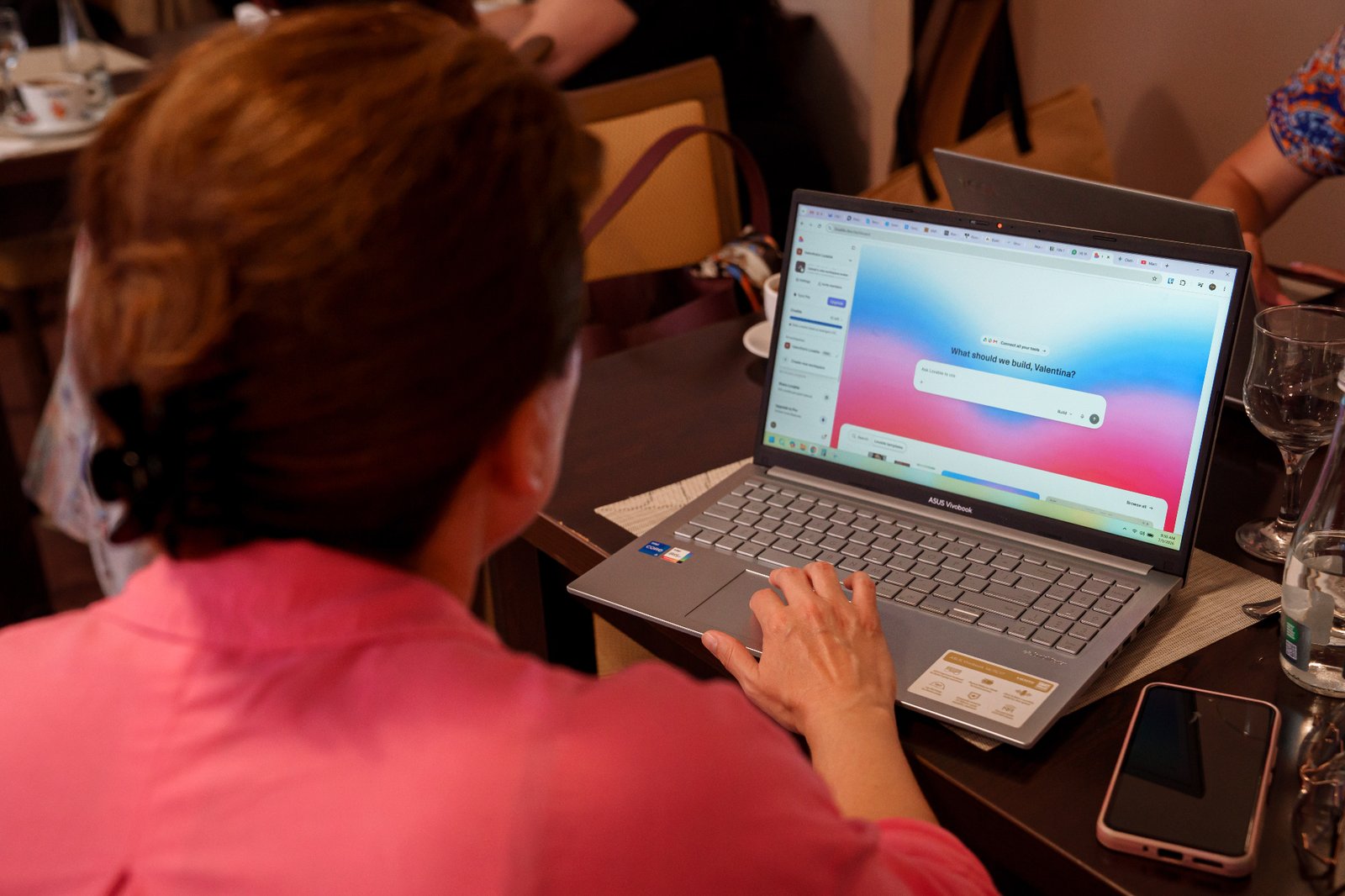
În acest articol
The software industry is going through a radical transformation. Just a few years ago, writing code by hand and moving every pixel around the screen required whole teams and considerable budgets. Today we're witnessing a new global phenomenon: Vibe Coding. This concept describes the process of building digital products (websites, apps, dashboards) by simply having a natural-language conversation with an AI. You no longer need to be an expert in programming syntax; your role becomes closer to that of a director or creative lead describing what the product should do, while the AI handles the actual code and design.
What exactly is Vibe Coding?
The concept was first proposed in February 2025 by Andrej Karpathy, renowned AI researcher and OpenAI cofounder. He described this new paradigm as a way of working in which the programmer is freed from writing code by hand and instead lets natural-language instructions guide the entire creative process, while the AI engine handles the technical execution.
The term became popular to describe an intent-driven, conversational workflow. Instead of writing lines of code, you collaborate with an AI assistant to go from an idea to a fully working prototype in just a few hours.
- Intent, not syntax: you describe what you want, not how to implement it step by step.
- Short cycles: each sentence becomes a new iteration of the product.
- Creation democratized: designers, founders and marketers can test ideas without waiting on a technical team.
How the conversational flow works
This approach compresses the traditional software development lifecycle (SDLC) and lets creators, designers, founders and marketers test their ideas instantly, with no technical barriers. Coding becomes the easy part, leaving you free to focus on strategy, UX and business architecture.
- Describe the product in natural language: e.g. "I want a landing page for a photo studio, with a portfolio and contact form".
- The AI turns intent into structure and code: it generates components, layout, styles and even base logic.
- Iterate through conversation: adjust colors, add sections, tweak forms — all via text messages.
- Publish directly: many platforms allow deploy and a custom domain without complex configuration.
Essential tools for Vibe Coding
Many platforms adapted to this style of work have appeared, each with its own strengths depending on project complexity:
- Lovable: an extremely powerful Swedish platform, ideal for web apps and websites through a chat interface. It supports complex structures, quick database integration (like Supabase), auth systems and connections to external tools (Shopify, HubSpot, Resend). It's the preferred tool in founder communities thanks to direct publishing and easy domain management. lovable.dev →
- Bolt: an excellent tool for rapid in-browser prototyping, loved by anyone who wants to ship an MVP in an extremely short time.
- Cursor: a code editor designed for developers who want to collaborate closely with AI. Unlike Lovable, Cursor plugs into the technical developer's workflow, offering contextual assistance directly on local code files.
- Base 44: used in e-learning and rapid-development communities, capable of automatically generating full LMS platforms or online stores in just a few days.
- Replit: one of the pioneers of this space, which launched a vibe coding agent capable of running and hosting enterprise-grade applications, used by hobbyists and Fortune 500 companies alike.
Real-world impact: prototypes built in hours
The efficiency of this way of working isn't just theoretical. In practice sessions organized by the FREED community, participants without a deep technical background shipped surprising apps in record time:
- PetRide: a taxi service for pets.
- BarkTranslate: a fun simulator to translate dog barks.
- Impact calculators: simulators for analyzing your digital carbon footprint.
- Numen Patagonia (B2B Store): a full e-commerce platform for wholesale, built from scratch by a founder in just two intense days during a free Lovable weekend.
Challenges and best practices in Vibe Coding
The execution speed is dazzling, but it's important not to fall into the trap of speed without control. A few things to keep in mind:
- Security first: AI can generate code that looks great but is vulnerable. For critical elements (databases, payments, authentication), always use recognized, secure third-party services. Never store passwords or API keys directly in visible code.
- Planning prevents waste: before typing your first prompt, define the structure on paper. Plan mode in tools like Lovable helps you set up the site's structure without wasting credits. See the prompting guide →
- Personalization: avoid the generic look by integrating your logo, brand colors and real photos instead of AI-generated stock.
- Conscious iteration: progress step by step, test each component and use version history to roll back to a stable variant if something goes off.
Vibe Coding opens an era where the only limit to creating a software product is the clarity of your own idea. If you can describe it, you can build it. Want to practice with the Black Sea community? Join us →
Autor
Carmen Gerea
Official Lovable ambassador in Chile. Founder, builder and community connector. Adapted for Black Sea Vibes.